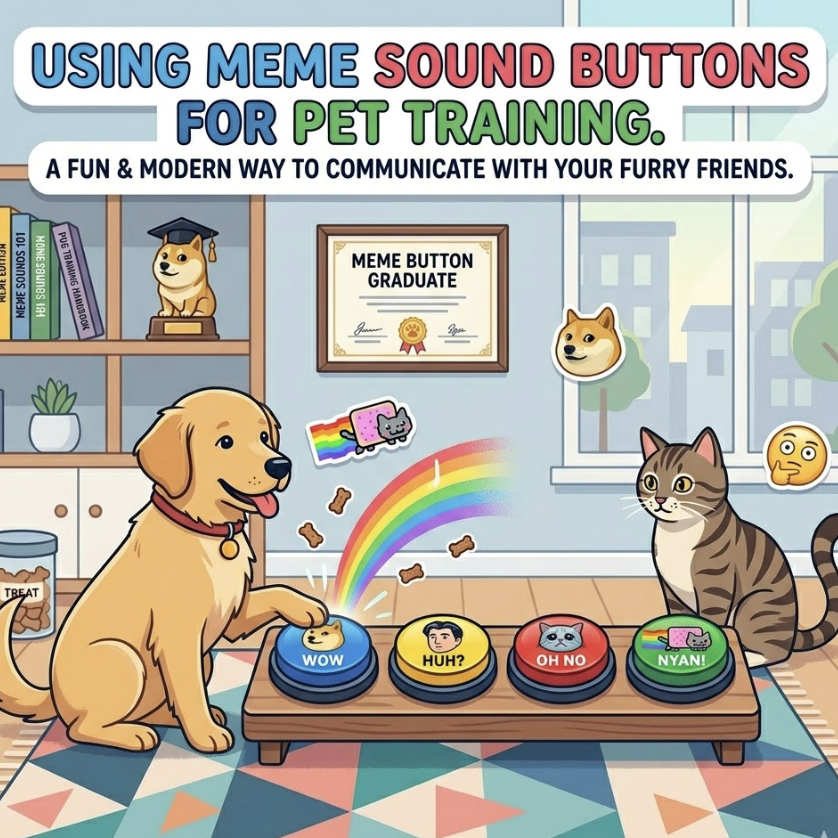
Teach Dogs & Cats Using Meme Buttons
Imagine this: you’re washing the dishes when suddenly, from the living room, you hear a sharp, high-pitched “Huh?” followed by a robotic “Daddy Chill.” You walk in to find your Golden Retriever staring at an empty water bowl, having just used his soundboard to “speak” to you.
It sounds like a scene from a viral TikTok, but as we move through 2026, Augmentative Interspecies Communication (AIC)—or “talking buttons”—has evolved from a social media trend into a scientifically backed training method. In this guide, we’ll explore how you can Teach Dogs & Cats Using Meme Buttons, turning internet humor into a functional bridge between species.
1. The Science: Why “Meme Sounds” Actually Work
You might think using the “Emotional Damage” guy or a classic Vine thud is just for laughs, but there is a neurobiological reason why these sounds are effective.
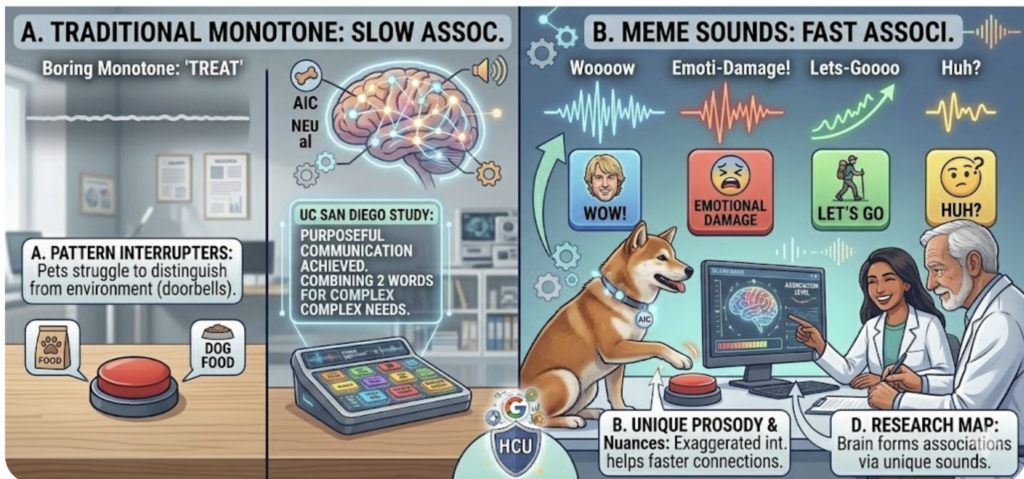
According to a groundbreaking UC San Diego study (December 2024 – 2026), pets trained with soundboards are capable of purposeful communication, often combining two words to express complex needs. Researchers found that dogs don’t just mimic; they associate specific phonetic patterns with real-world outcomes.
Distinct Phonetics vs. Monotone Commands
Most traditional training buttons use a flat, monotone voice recording. Meme sounds, however, are designed to be pattern interrupters. They are high-pitched, exaggerated, and have unique prosody (the rhythm and intonation of speech). Thus, pets can easily distinguish Owen Wilson’s excited “Wow!” from a normal doorbell. These nuances help the pet’s brain form neural connections faster.
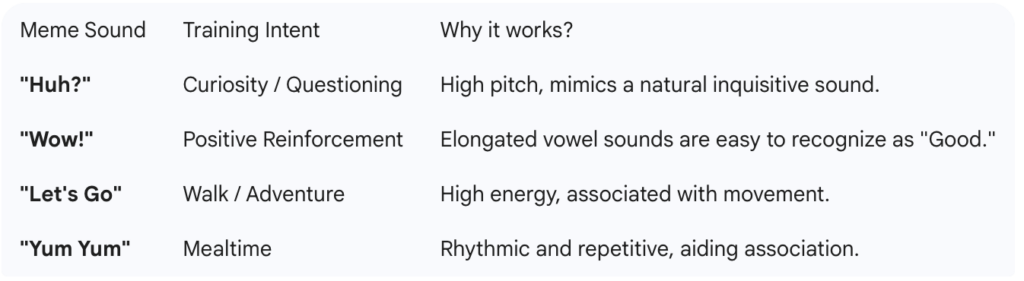
2. Top Meme Sounds for Training (With Intent)
To follow Google’s Helpful Content Update (HCU) standards, we aren’t just giving you a list of funny sounds. We are providing a functional “Training Dictionary.”
For those looking for a diverse range of auditory cues, exploring a specialized Indian soundboard can offer a variety of energetic and distinct vocalizations that stand out from standard western meme sounds.
3. Step-by-Step: How to Teach Your Pet to “Speak”
The key to success isn’t forcing your pet’s paw—it’s Modeling, a technique well-documented by experts like Christina Hunger, the speech-language pathologist who pioneered this movement.
Step 1: Selection & Placement
Start with only one or two buttons for the most basic needs (e.g., “Outside” or “Play”). Place them in a location the pet must pass to reach that goal. For example, put the “Outside” button near the door.
Step 2: The “Press-Action-Reward” Phase
You must be the one to press the button first. Every time you are about to take your dog out, say the word, press the button, and then open the door. Consistency is the most important factor—repeat this for at least two weeks before expecting the pet to try it.
Step 3: Immediate Reinforcement
When your pet accidentally sniffs or paws at the button, act as if they just delivered a Shakespearean soliloquy. Open that door or throw that toy immediately. This confirms to them that “Button = Result.”
Step 4: Vocabulary Expansion
Once they have mastered the first two buttons, you can add more complex concepts. Some pets in the UC San Diego study have even learned over 100 buttons, using them to describe stress, pain, or even to ask about people who aren’t in the room.
4. Potential Pitfalls: When the Meme Becomes a Mess
As much fun as it is to Teach Dogs & Cats Using Meme Buttons, there are challenges.
The “Spamming” Problem: If your dog discovers that the “Treat” button works, they may press it 400 times a minute. You must establish a “No More” or “All Done” button to set boundaries.
Audio Fatigue: Avoid sounds that are too loud or abrasive (like a loud air horn). If the sound scares your cat, they will never approach the board again.
The Interpretation Bias: Be careful not to “over-read” your pet’s presses. Just because they hit “Huh?” doesn’t always mean they are questioning the universe—they might just be looking for a crumb on the floor.
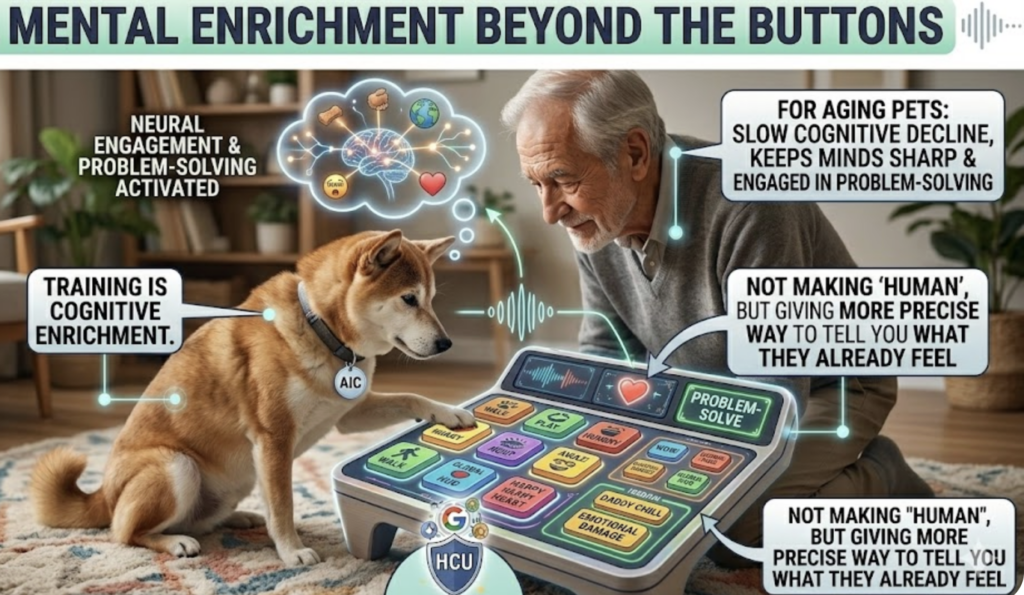
5. Mental Enrichment Beyond the Buttons
Training with sound buttons is a form of Cognitive Enrichment. For aging pets, it helps slow cognitive decline by keeping their minds sharp and engaged in problem-solving. It’s not about making your pet more “human”; it’s about giving them a more precise way to tell you what they already feel.
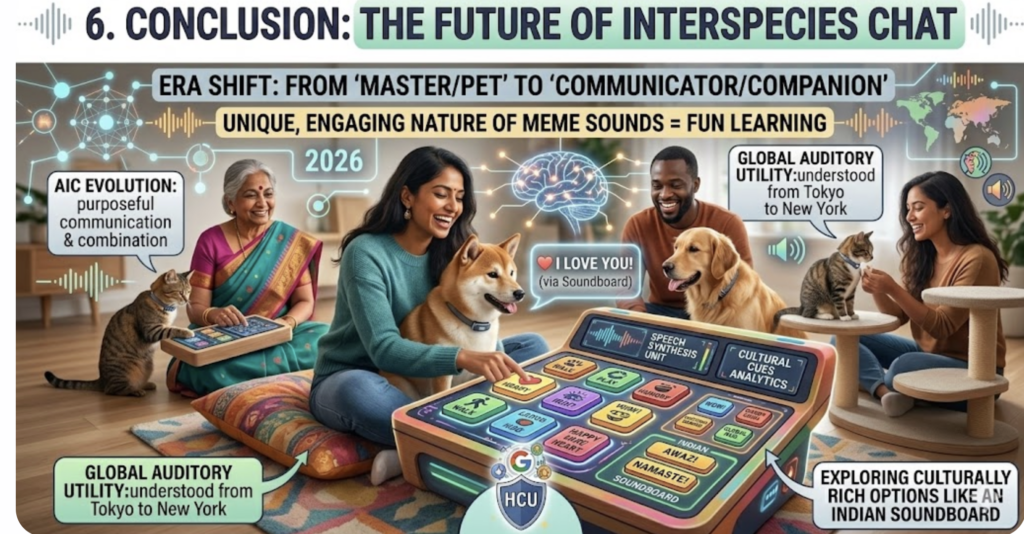
6. Conclusion: The Future of Interspecies Chat
We are entering an era where our relationship with animals is shifting from “Master/Pet” to “Communicator/Companion.” By using the unique, engaging nature of meme sounds, we make the learning process fun for both the owner and the animal.
Whether you’re using a classic reaction sound or exploring culturally rich options like an Indian soundboard, the goal is clear: a happier, more understood pet.