
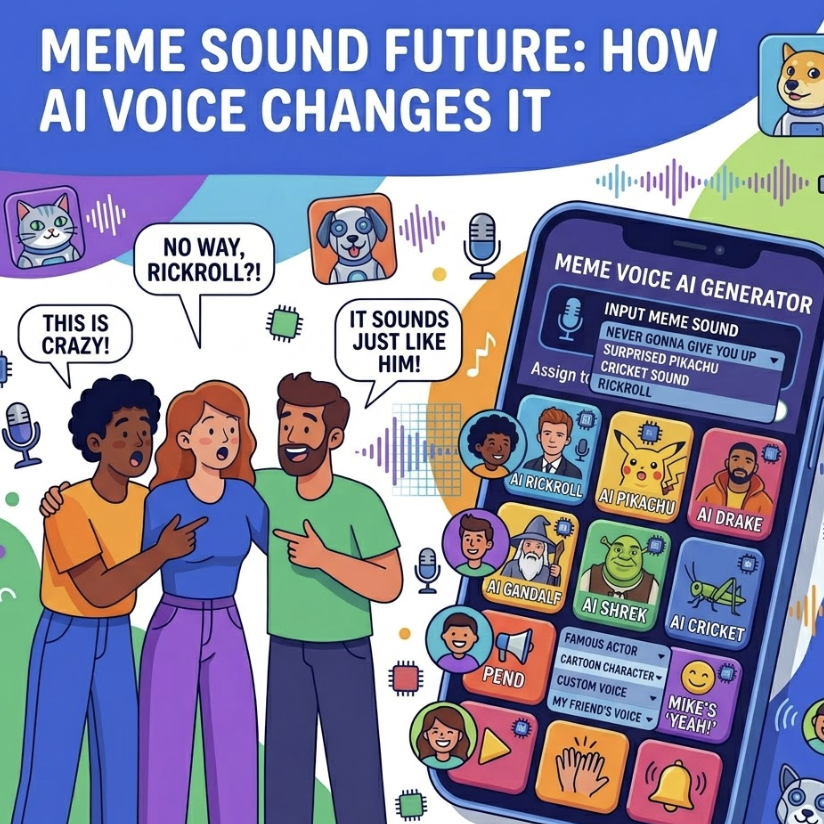
Meme Sound Future: How AI Voice Changes It
The digital soundscape is shifting. If you’ve spent any time on TikTok, YouTube Shorts, or Discord recently, you’ve probably noticed that the “instant buttons” we use to react to moments have evolved. We are moving past the era of simple, static sound bites into a new frontier of hyper-personalized, synthetic audio.
In this deep dive, we explore the Meme Sound Future: How AI Voice Changes It and how you can leverage these tools to build a unique “audio brand” that resonates with modern audiences.
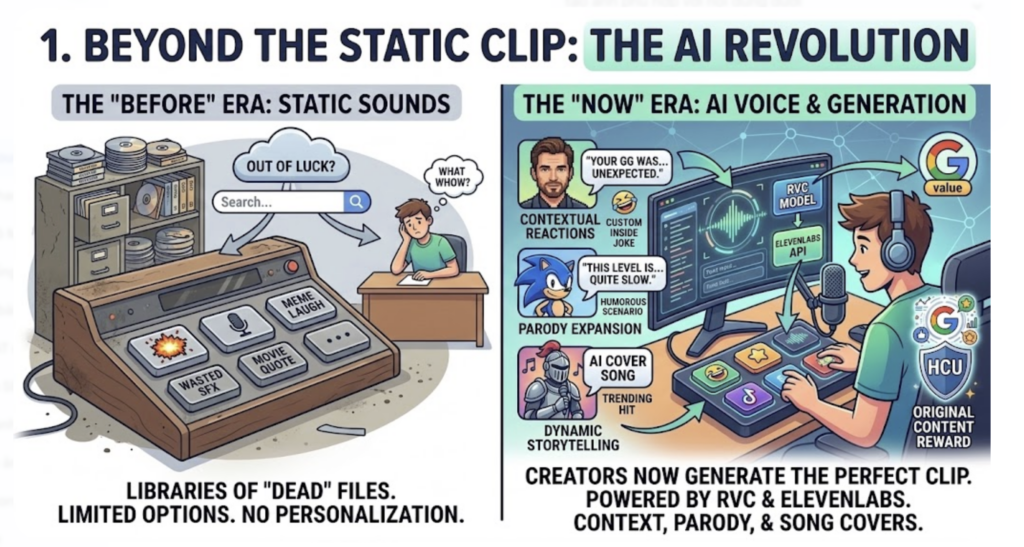
1. Beyond the Static Clip: The AI Revolution
For over a decade, soundboards were libraries of “dead” files. You’d find a classic “Wasted” sound from GTA or a movie quote, and that was it. If the quote wasn’t exactly what you needed, you were out of luck.
AI Voice technology—powered by models like RVC (Retrieval-based Voice Conversion) and ElevenLabs—has flipped the script. Instead of searching for the perfect clip, creators are now generating it. This shift allows for:
Contextual Reactions: Making a celebrity voice say a niche inside joke specific to your gaming stream.
Parody Expansion: Taking a well-known character and putting them in entirely new, hilarious scenarios.
Dynamic Storytelling: Creating “AI Cover” songs where unexpected characters sing trending hits.
2. The Power of Hyper-Personalization
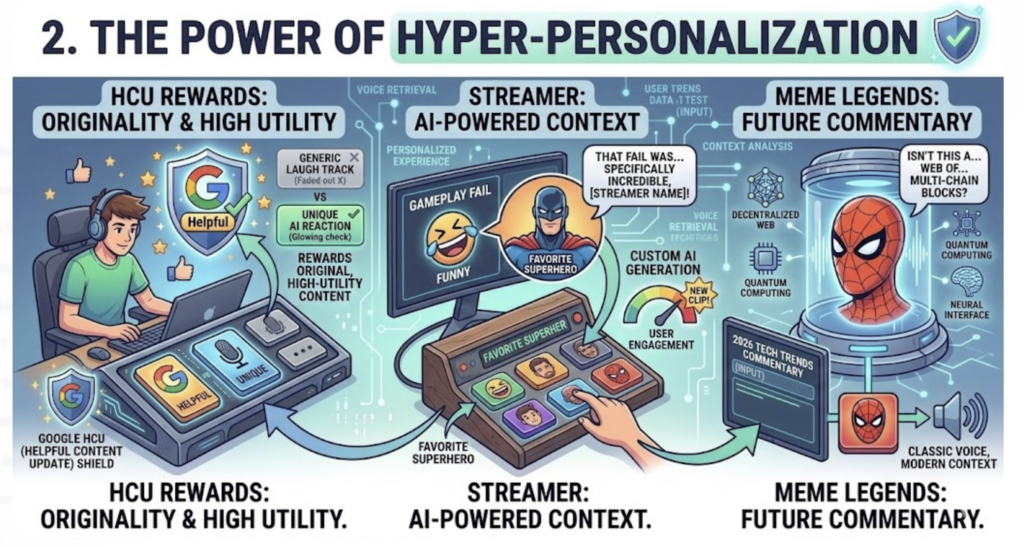
Google’s Helpful Content Update (HCU) rewards “original, high-utility content.” In the world of audio, nothing is more original than a soundboard built on custom AI generations.
Imagine you are a streamer. Using a generic “laugh track” is fine, but using an AI-generated voice of a famous superhero reacting specifically to your gameplay fail is high-utility content. It keeps your audience engaged because they haven’t heard that exact clip anywhere else.
For fans of classic memes, this technology allows us to breathe new life into legends. For instance, while you can find a classic Spiderman meme song soundboard to trigger nostalgia, AI tools now allow you to take that iconic 60s Spiderman voice and make it commentate on modern 2026 tech trends. It’s a bridge between internet history and the future.
3. How to Create “HCU-Safe” AI Audio Content
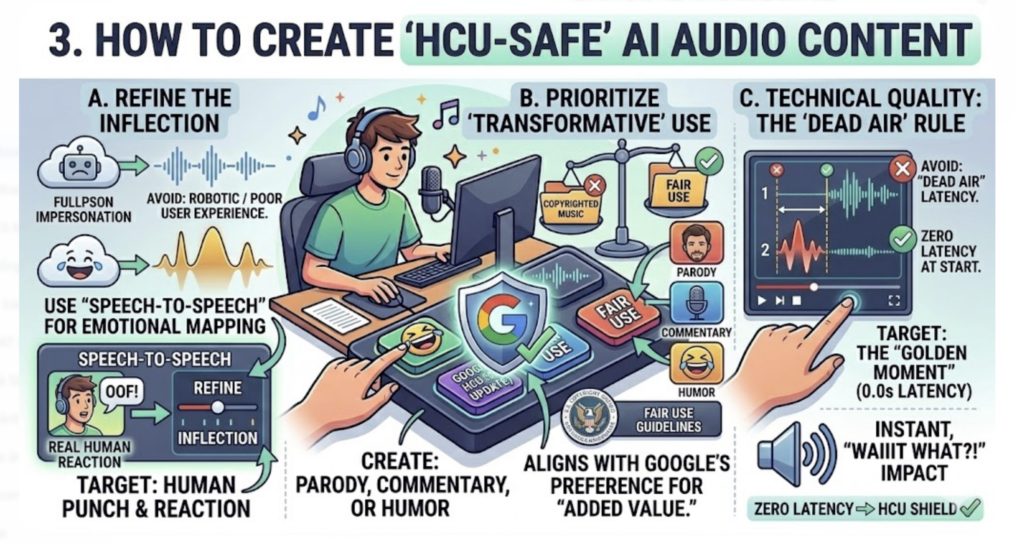
Google’s algorithms are increasingly sophisticated at detecting “low-effort” automated content. To ensure your blog or soundboard site stays in Google’s good graces, follow the Human-in-the-Loop principle:
A. Refine the Inflection
Don’t just take the first generation the AI gives you. Use “Speech-to-Speech” tools to provide the emotional map. If the AI sounds too robotic, it provides a poor user experience. A high-quality meme sound should have the “punch” of a real human reaction.
B. Prioritize “Transformative” Use
Under the U.S. Copyright Office Fair Use guidelines, transformative use is key. Don’t use AI to pirate music or impersonate people for malicious gain. Use it to create parody, commentary, or humor. This not only protects you legally but aligns with Google’s preference for “added value.”
C. Technical Quality: The “Dead Air” Rule
Whether you use AI or traditional clips, the “Golden Moment” matters. Ensure your files have zero latency at the start. An AI voice saying “Wait, what?” is only funny if it triggers the millisecond you click the button.
4. Breaking the Language Barrier
One of the most profound ways AI is changing the meme future is through Instant Localization. Traditionally, a meme born in the US stayed in English-speaking circles until someone manually recreated it.
With AI Voice cloning, a viral Spanish meme can be perfectly translated into English while keeping the original speaker’s unique tone and timber. This creates a global “Meme Language” that transcends borders, allowing platforms like Instants.Meme to serve a truly international audience.
5. The Ethical Checklist for Creators
As we embrace the Meme Sound Future: How AI Voice Changes It, we must address the ethics of “Deepfake” audio.
Transparency: Always label AI-generated sounds. Most platforms, including YouTube and TikTok, now require or strongly encourage “AI Labels” to maintain user trust.
Consent: Avoid cloning the voices of private individuals. Stick to public figures within the realm of parody or use “Community Voices” provided by reputable AI hubs.
Safety: Stay away from tools that lack safety filters. Reputable platforms like [liên kết đáng ngờ đã bị xóa] have strict policies against generating hate speech or non-consensual content.
6. What’s Next: Real-Time AI Interaction
We are moving toward a world where soundboards aren’t just buttons—they are assistants. In the near future, we expect to see:
Context-Aware Boards: Your soundboard “listens” to your stream and highlights the three most relevant memes for the current moment.
Voice-to-Meme: You speak a sentence, and the software instantly outputs it in the voice of a meme legend.
Conclusion
The future of meme sounds isn’t about having a bigger library; it’s about having a smarter one. AI Voice technology is the ultimate tool for creators who want to escape the “generic” trap. By combining the nostalgia of a classic Spiderman meme song with the limitless possibilities of AI generation, you provide a rich, multi-layered experience that both users and search engines will love.
Ready to start your audio journey? Focus on quality, stay ethical, and always keep the “Golden Moment” of timing at the heart of your creations.
As we stand on the brink of this sonic revolution, it is clear that the Meme Sound Future: How AI Voice Changes It is not just a passing trend, but a fundamental shift in digital expression. By embracing these tools responsibly, creators can move beyond repetitive clips to build truly interactive and personalized communities. Ultimately, staying ahead of the curve means understanding the Meme Sound Future: How AI Voice Changes It today so you can lead the trends of tomorrow.