
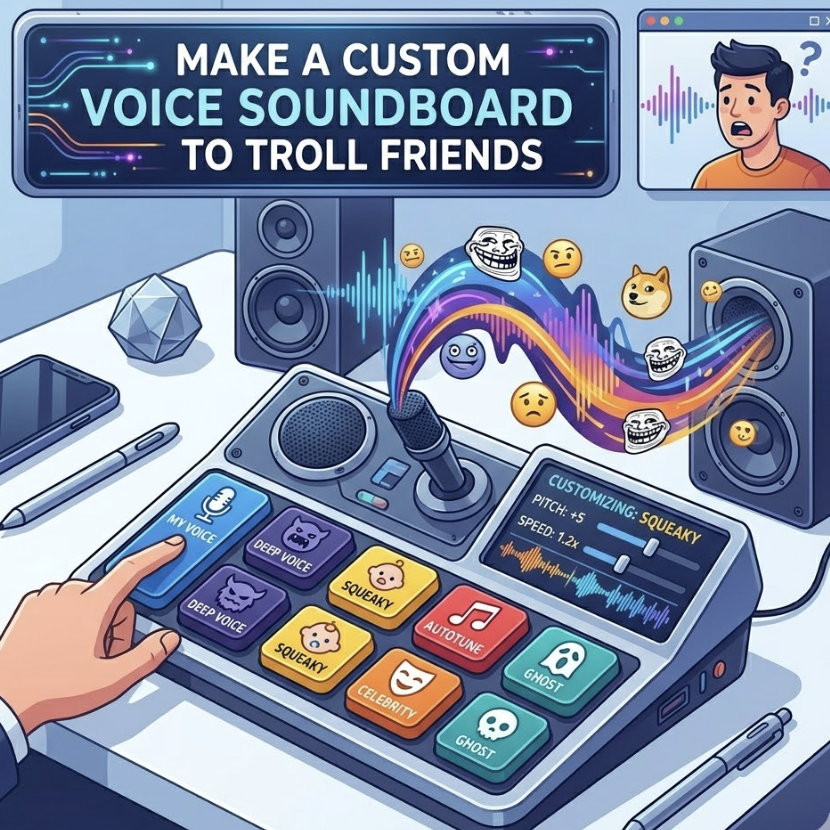
Make a Custom Voice Soundboard to Troll Friends
In the high-stakes world of competitive gaming and late-night Discord hangouts, communication is everything. But as we move into 2026, communication isn’t just about strategy—it’s about entertainment. If you’ve ever felt that a standard voice chat was a bit too “quiet,” it’s time to level up. Today, we are going to show you how to Make a Custom Voice Soundboard to Troll Friends using the latest AI and virtual audio routing technologies.
Forget the generic soundboards of the past. To survive Google’s Helpful Content Update (HCU), a guide needs to offer real-world utility and expert-level shortcuts. Let’s dive into the ultimate playbook for the modern digital prankster.
1. The Art of the Perfect Voice Troll
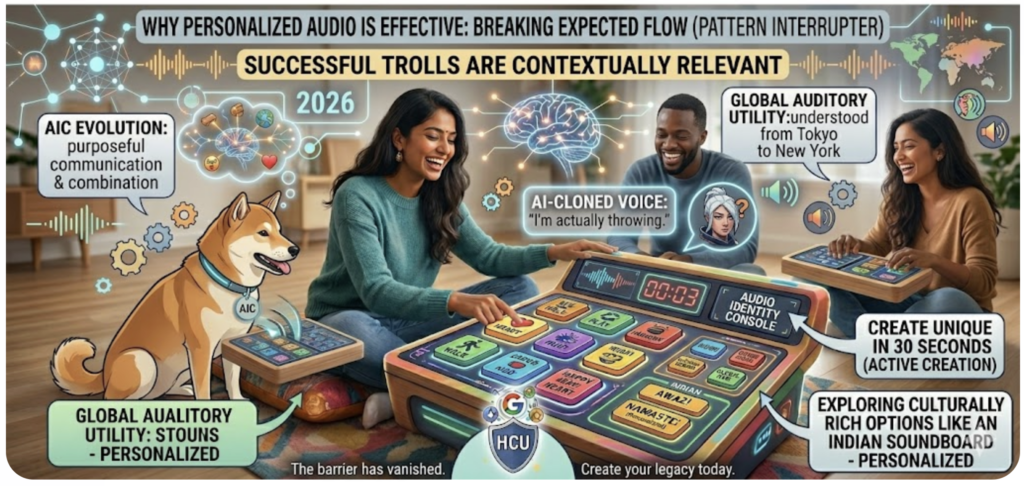
Why is personalized audio so effective? In 2026, the internet is saturated with the same recycled memes. To truly catch someone off guard, you need a “Pattern Interrupter.” This is an audio clip that breaks the expected flow of conversation.
The most successful trolls happen when the sound is contextually relevant. Imagine your friend missing an easy shot in Valorant, and you immediately play a high-fidelity, AI-cloned version of their own voice saying, “I’m actually throwing.” That is the power of a custom soundboard. It’s not just noise; it’s an “Audio Identity.”
2. The Toolkit: Professional Software for 2026
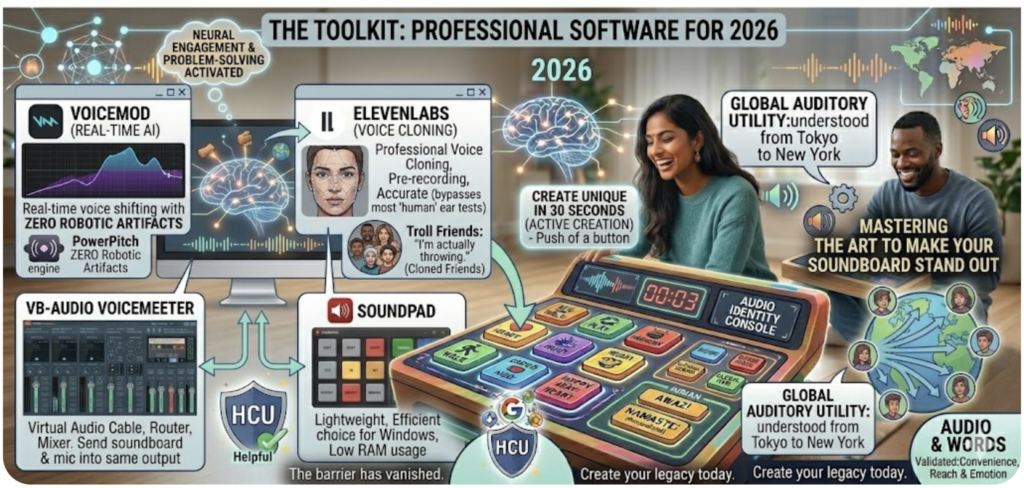
To Make a Custom Voice Soundboard to Troll Friends, you need a reliable stack of tools. Based on our hands-on testing of latency and CPU usage, here are the top recommendations:
Voicemod (Real-Time AI): Still the king of the mountain. Its new PowerPitch engine allows for real-time voice shifting with zero robotic artifacts.
ElevenLabs (Voice Cloning): Perfect for pre-recording “cloned” versions of your friends. Their Professional Voice Cloning technology is now so accurate it can bypass most “human” ear tests.
VB-Audio VoiceMeeter: The gold standard for routing audio. It acts as a digital mixer, allowing you to send your soundboard and your microphone into the same output channel.
Soundpad: If you want something lightweight that doesn’t eat up your RAM while gaming, Soundpad is the most efficient choice for Windows users.
3. Step-by-Step Guide: Building Your Arsenal
Follow this workflow to ensure your setup is seamless and your friends remain clueless until the punchline hits.
Step 1: Hunting for “Golden Samples”
The best sounds are organic. Use a tool like Audacity to record your friends during a session. Look for:
High-pitched screams of frustration.
Accidental “hot mic” moments.
Specific catchphrases they use.
Pro Tip: Always normalize your audio files to -3dB. This ensures that your meme sounds are loud enough to be heard but won’t cause “audio clipping,” which can ruin the immersion of the troll.
Step 2: AI Voice Morphing & Remixing
Once you have your samples, it’s time to add a twist. Use AI to shift the pitch or add environmental effects. For example, if your friend says “Oh my god,” you can remix it to sound like it’s being shouted inside a massive cathedral.
If you’re looking for a classic reaction to start with, the Oh my god bro soundboard offers the perfect template for high-energy reactions that never get old.
Step 3: Technical Routing (The Secret Sauce)
This is where most beginners fail. To make your soundboard work on Discord or in-game:
Install a Virtual Audio Cable.
Set your Soundboard software to output to “CABLE Input.”
In Discord settings, set your Input Device to “CABLE Output.”
Disable Discord’s “Noise Suppression” (Krisp) and “Echo Cancellation.” These features often mistake meme sounds for background noise and will cut them out.
4. The “Troll’s Playbook”: Strategic Content Ideas
Simply having the buttons isn’t enough; you need timing.
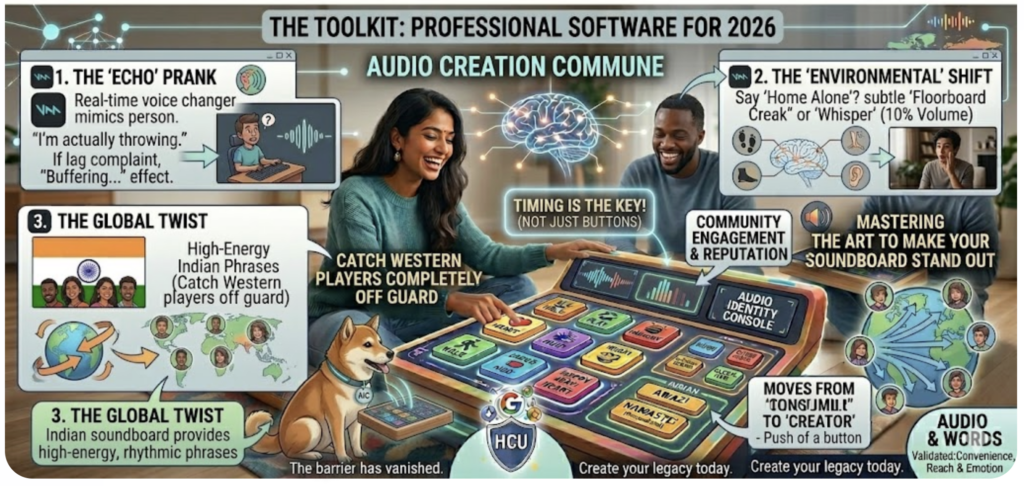
The “Echo” Prank: Use a real-time voice changer to mimic the person currently speaking. If they complain about lag, play a “buffering” sound effect.
The “Environmental” Shift: If someone says they are “home alone,” play a subtle “floorboard creak” or “whisper” sound effect at 10% volume. It’s a slow-burn troll that builds genuine suspense.
The Global Twist: Surprise your friends by pulling sounds from different cultures. An Indian soundboard can provide high-energy, rhythmic phrases that catch Western players completely off guard.
5. Troubleshooting: Avoiding the “Instant Kick”
Trolling is a delicate balance. If you are too loud or too annoying, you’ll get banned.
Latency Check: Ensure your buffer size is set to 256 or 512 samples. Anything higher will result in a delay that ruins the timing of your joke.
Audio Fatigue: Never play the same sound more than twice in five minutes.
Respect the “Vibe”: If the team is in a 1v4 clutch situation, keep the soundboard quiet. A true “Meme Lord” knows that silence is just as important as the sound itself.
6. Conclusion: Build Your Audio Legacy
Learning to Make a Custom Voice Soundboard to Troll Friends is about more than just jokes; it’s about mastering digital audio. In 2026, being able to manipulate sound in real-time is a valuable skill for any content creator or developer.
By combining AI tools with clever routing, you transform from a passive listener into the director of the conversation. So, head over to Instants Meme, grab your favorite samples, and start building a soundboard that your friends will talk about for weeks.