
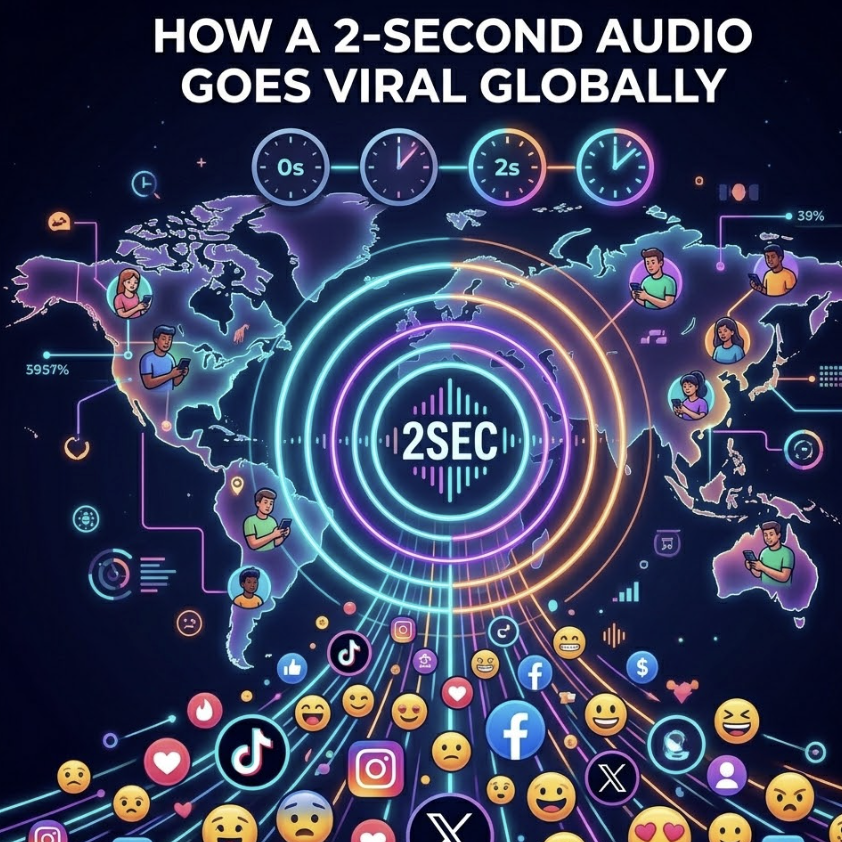
How a 2-Second Audio Goes Viral Globally
In the fast-paced ecosystem of 2026 digital consumption, the currency of attention has been devalued from minutes to mere seconds. We no longer wait for a chorus to kick in; we decide whether to stay or scroll in the time it takes to blink. This shift has given rise to a fascinating phenomenon: the global domination of micro-audio.
In this deep dive, we explore How a 2-Second Audio Goes Viral Globally, decoding the intersection of neurobiology, algorithmic logic, and the raw power of meme culture.
1. The Anatomy of a 2-Second Viral Hit
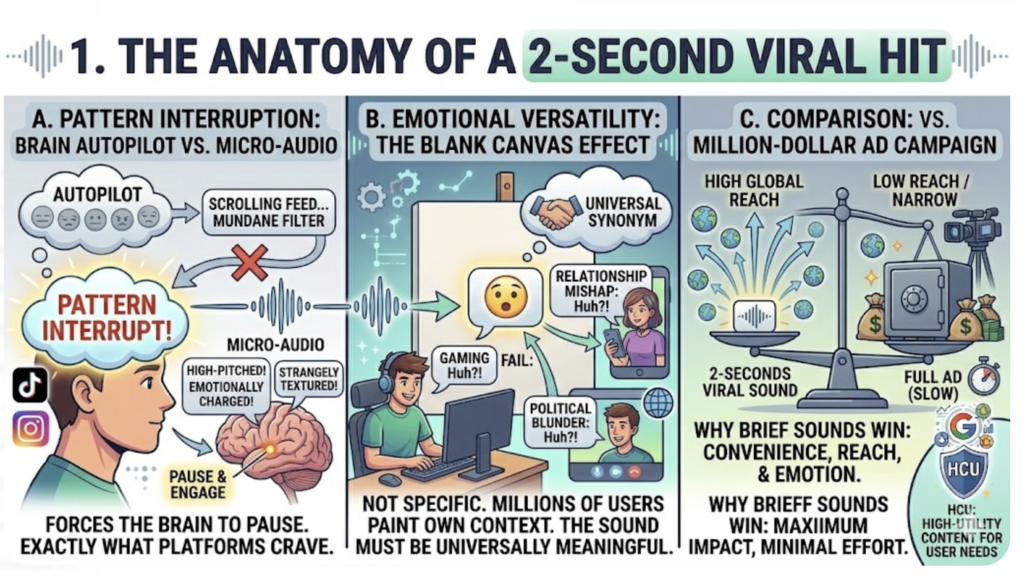
Why does a sound as brief as a single breath—like the iconic “Huh?” or a quick vine thud—achieve more reach than a million-dollar ad campaign? The secret lies in Pattern Interruption.
Our brains are wired to filter out the mundane. When you are scrolling through a feed, your mind is on “autopilot” until it encounters a “Pattern Interrupt.” A 2-second audio clip that is high-pitched, emotionally charged, or strangely textured forces the brain to pause. This micro-moment of friction is exactly what platforms like TikTok and Instagram Reels crave.
The Power of Emotional Versatility
A viral sound is rarely specific. To go global, a sound must be “emotionally open.” It needs to act as a blank canvas upon which millions of users can paint their own context. Whether it is a reaction to a gaming fail, a relationship mishap, or a political blunder, the audio must be a universal synonym for a specific feeling.
2. The 2026 Algorithm: Why Micro-Audio is King
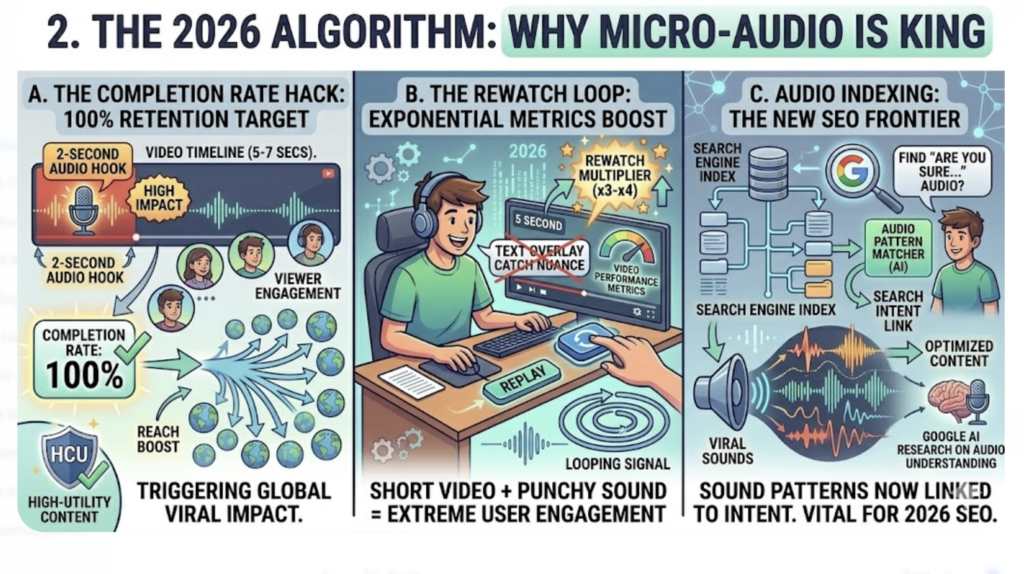
Google’s Helpful Content Update (HCU) and social algorithms have evolved to prioritize “Retention” and “Completion Rates.” This is the technical backbone of How a 2-Second Audio Goes Viral Globally.
The Completion Rate Hack: If a video is only 5 to 7 seconds long and features a high-impact 2-second audio hook, the viewer is almost guaranteed to watch the entire clip. High completion rates signal to the algorithm that the content is “high-value,” triggering a massive boost in reach.
The Rewatch Loop: Short, punchy sounds often lead to “Rewatch Multipliers.” Viewers frequently replay a 5-second video three or four times to catch the nuance of the sound or the text overlay, exponentially increasing the video’s performance metrics.
Audio Indexing: Search engines are now more adept at indexing audio. According to Google’s AI Research on Audio Understanding, search intent is now linked to specific audio patterns, making viral sounds a vital part of SEO.
3. Case Study: The “Daddy Chill” Effect
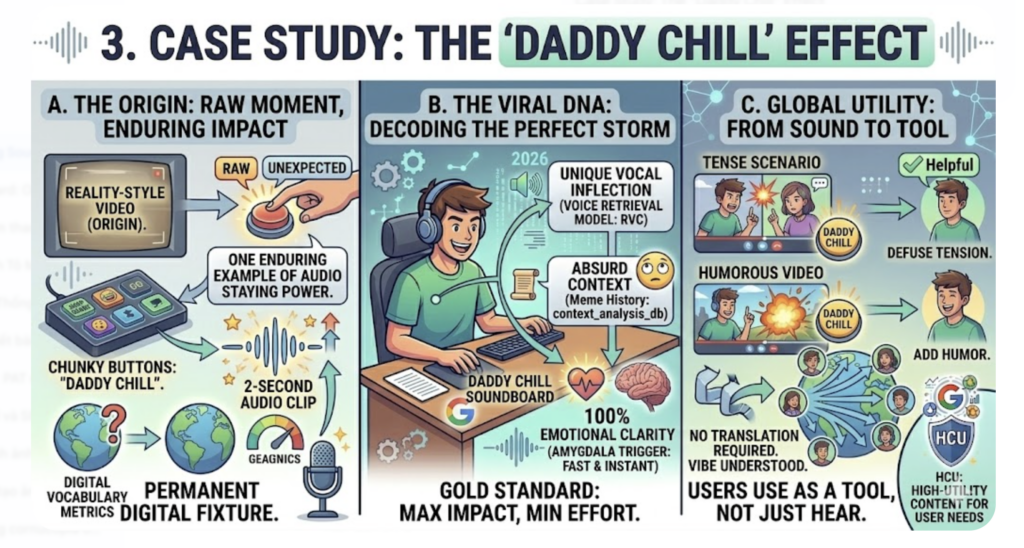
One of the most enduring examples of audio staying power is the “Daddy Chill” meme. What started as a raw, unexpected moment in a reality-style video has become a permanent fixture in the digital vocabulary.
When you look at the Daddy Chill soundboard, you see the perfect storm of viral elements: a unique vocal inflection, an absurd context, and 100% emotional clarity. It is the gold standard for How a 2-Second Audio Goes Viral Globally. It doesn’t require a translation; the “vibe” is understood from Tokyo to New York. Users don’t just hear the sound; they use it as a tool to defuse tension or add humor to their own videos, turning a 2-second clip into a global utility.
4. How to Create “HCU-Safe” Viral Audio
If you are a creator or a marketer looking to capture lightning in a bottle, you must move away from “low-effort” spamming. Google’s HCU rewards Originality and Utility.
Step 1: Aim for “Transformative” Value
Don’t just re-upload a trending sound. Add value by providing a new context, a remix, or a high-quality “filtered” version that sounds better on high-end speakers. According to U.S. Copyright Fair Use principles, transformative use is what keeps your content legal and algorithmically favored.
Step 2: The “Golden Moment” Extraction
When searching for the next viral hit, don’t look for a full sentence. Look for the “Golden Moment”—the 1.5 to 2.5 seconds where the pitch peaks or the emotion is most raw.
Step 3: Visual-Audio Synergy
A viral sound needs a visual “anchor.” When you post an original audio, ensure the on-screen text or the visual action mirrors the “vibe” of the sound. This creates a “dual-encoding” effect in the viewer’s brain, making the content twice as memorable.
5. The Future: AI-Generated Viral Hooks
As we discussed in the Meme Sound Future: How AI Voice Changes It, the next generation of 2-second hits will likely be synthetic. AI allows us to create “Perfect Pitch” sounds—audio engineered specifically to trigger the brain’s reward centers.
However, even with AI, the “Human-in-the-Loop” principle remains vital. The sounds that truly go viral are the ones that feel “accidentally perfect.” Humans have an incredible radar for authenticity; even if the sound is AI-generated, the intent behind its use must feel real.
6. Conclusion: Sound is the New Language
We have officially moved into a “Post-Text” era of social interaction. Understanding How a 2-Second Audio Goes Viral Globally is no longer just for “memers”—n it is a required skill for anyone communicating in the digital age.
Audio is the bridge that turns a static image into a shared experience. It is efficient, emotionally resonant, and globally accessible. So, the next time you hear a strange, 2-second “Oof” or a melodic “Daddy Chill,” don’t just dismiss it as noise. You are listening to the heartbeat of modern culture.